Monkey puzzle tree at a glance
The monkey puzzle tree is a long-lived evergreen conifer native to temperate forests of Chile and Argentina. Its accepted scientific name is Araucaria araucana. Stiff triangular leaves wrap around its branches like green armour, making a mature tree unmistakable and a cuddle inadvisable.
- Scientific name
- Araucaria araucana
- Plant family
- Araucariaceae
- Native range
- Central and southern Chile, southwest Argentina
- Plant type
- Evergreen conifer
- Maximum reported height
- Up to about 50 metres in its native range
- Conservation status
- Endangered globally
- Sun
- Full sun or partial shade
- Soil
- Moderately fertile, moist and well drained
How to identify a monkey puzzle tree
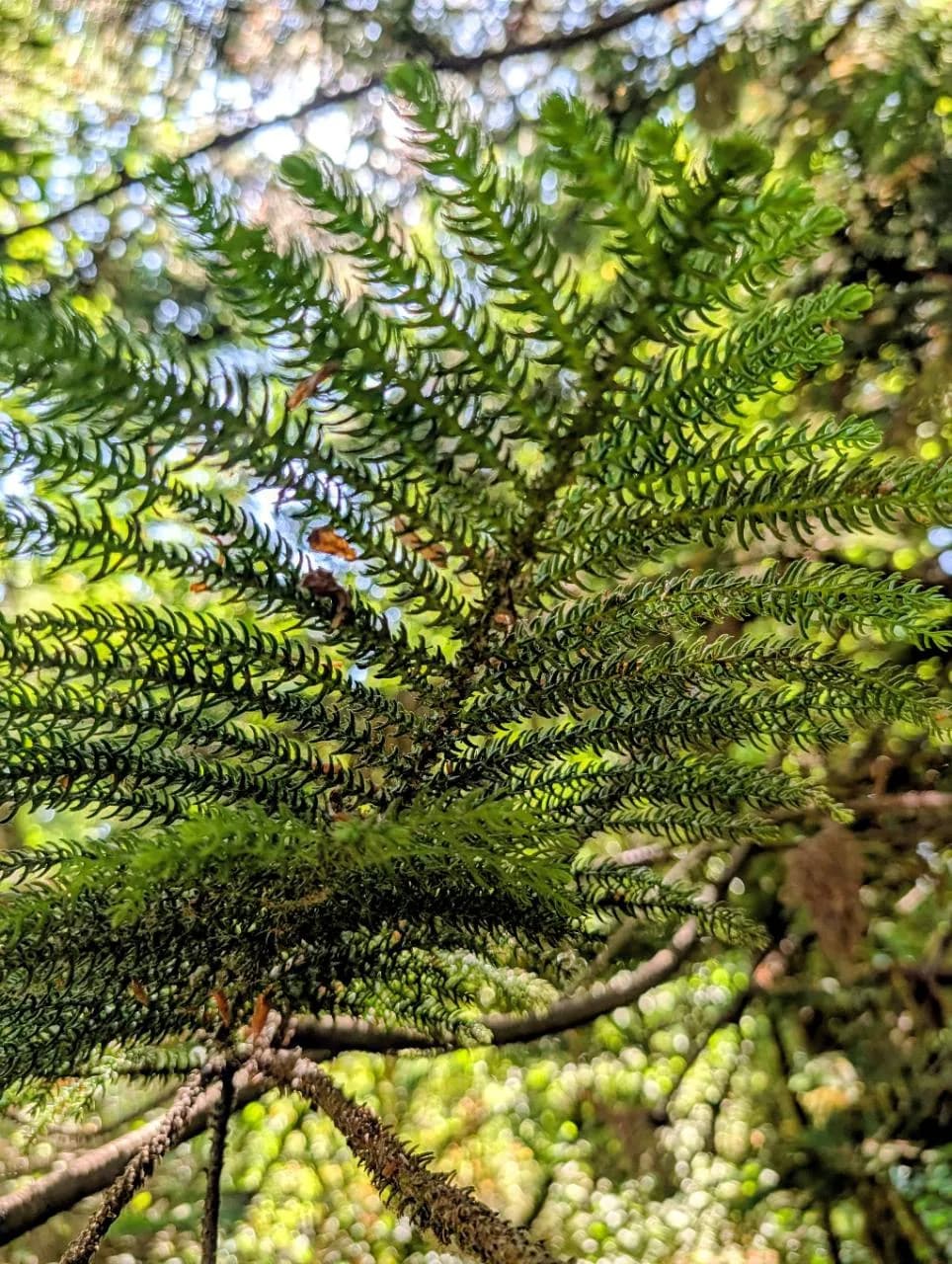
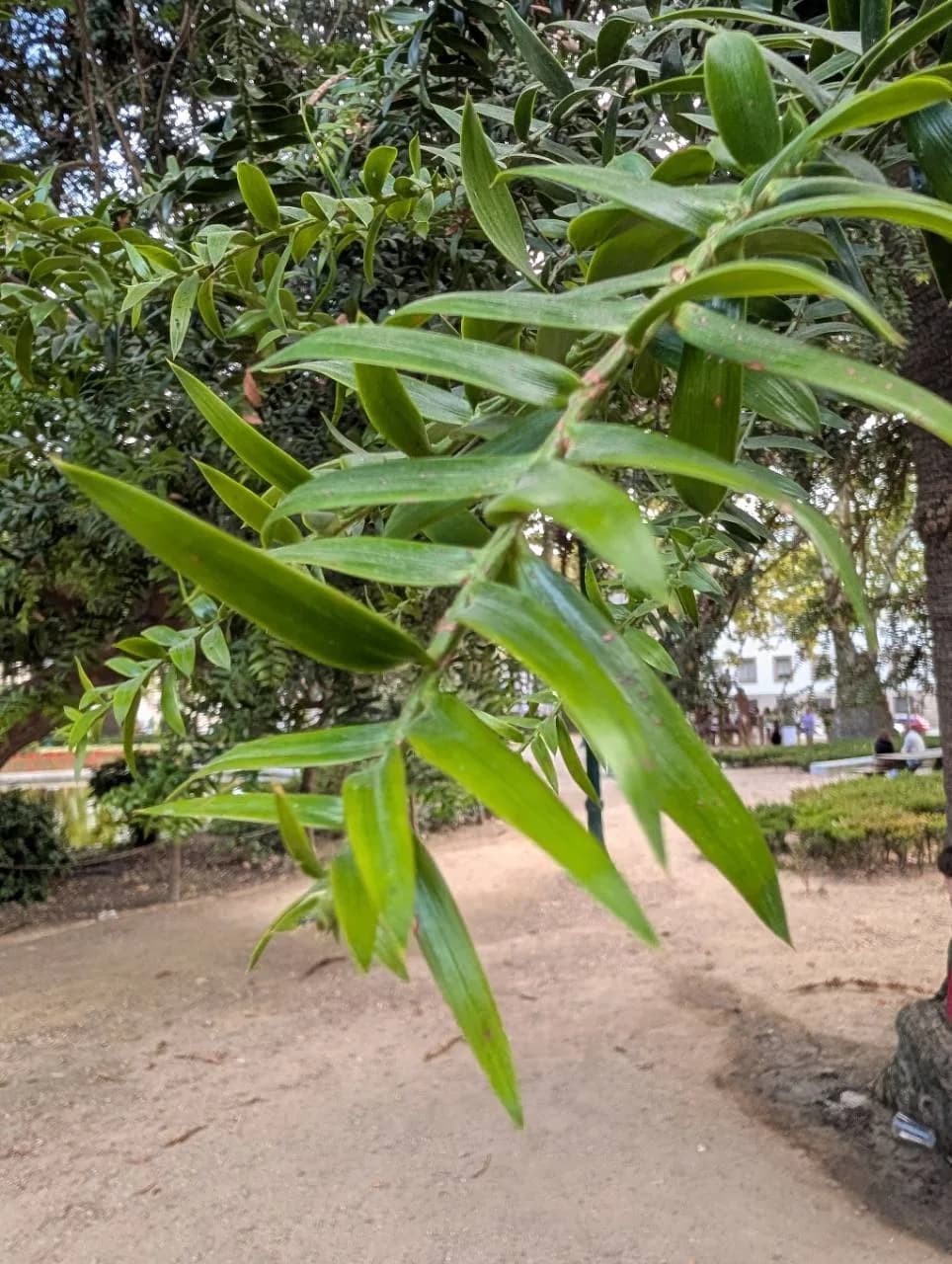
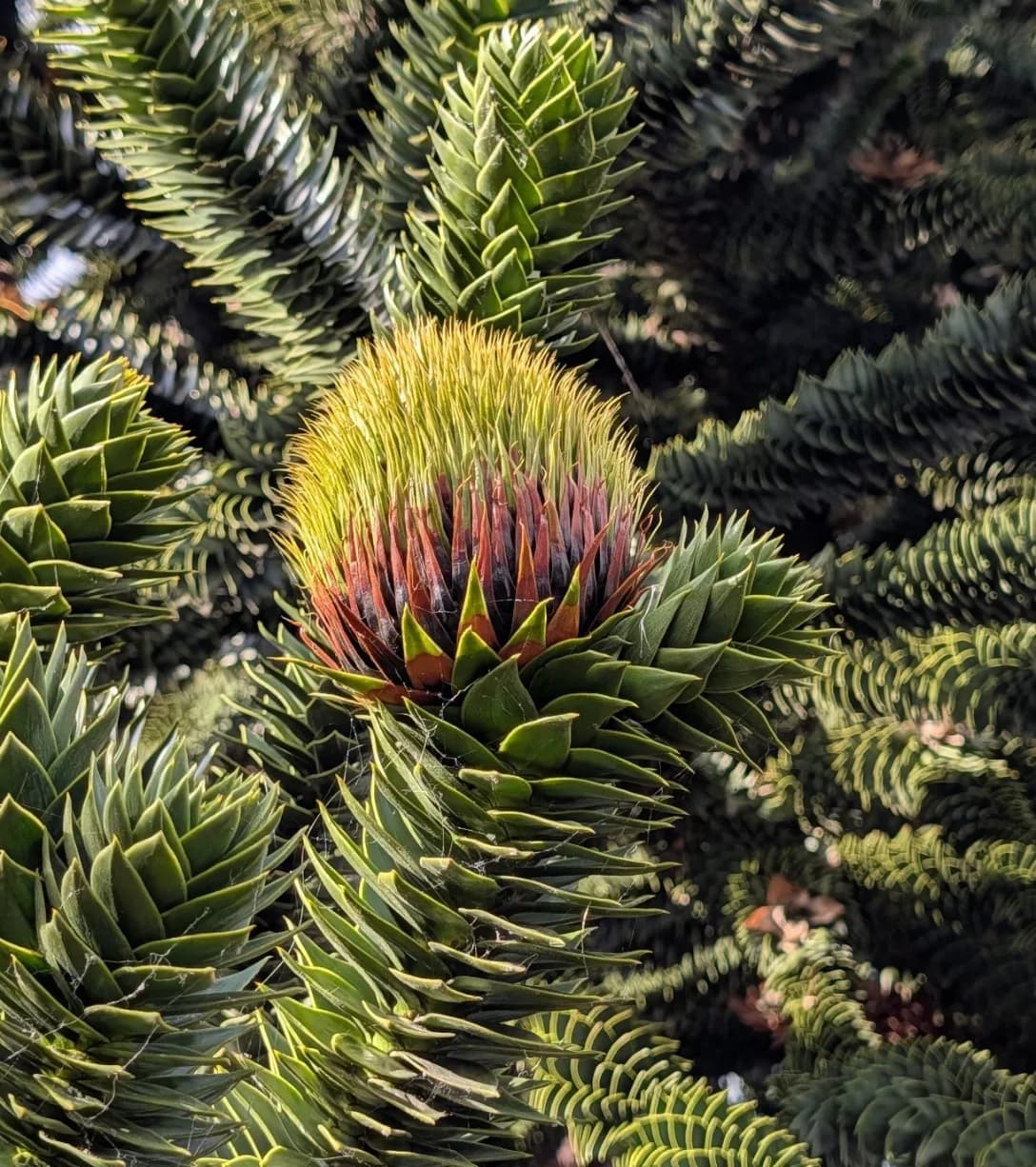
Look first at the leaves. They are dark green, glossy, rigid and triangular, with a sharp tip. Each leaf is roughly 3 to 4 cm long and the leaves overlap in spirals, covering the branch rather than hanging from it like ordinary needles.
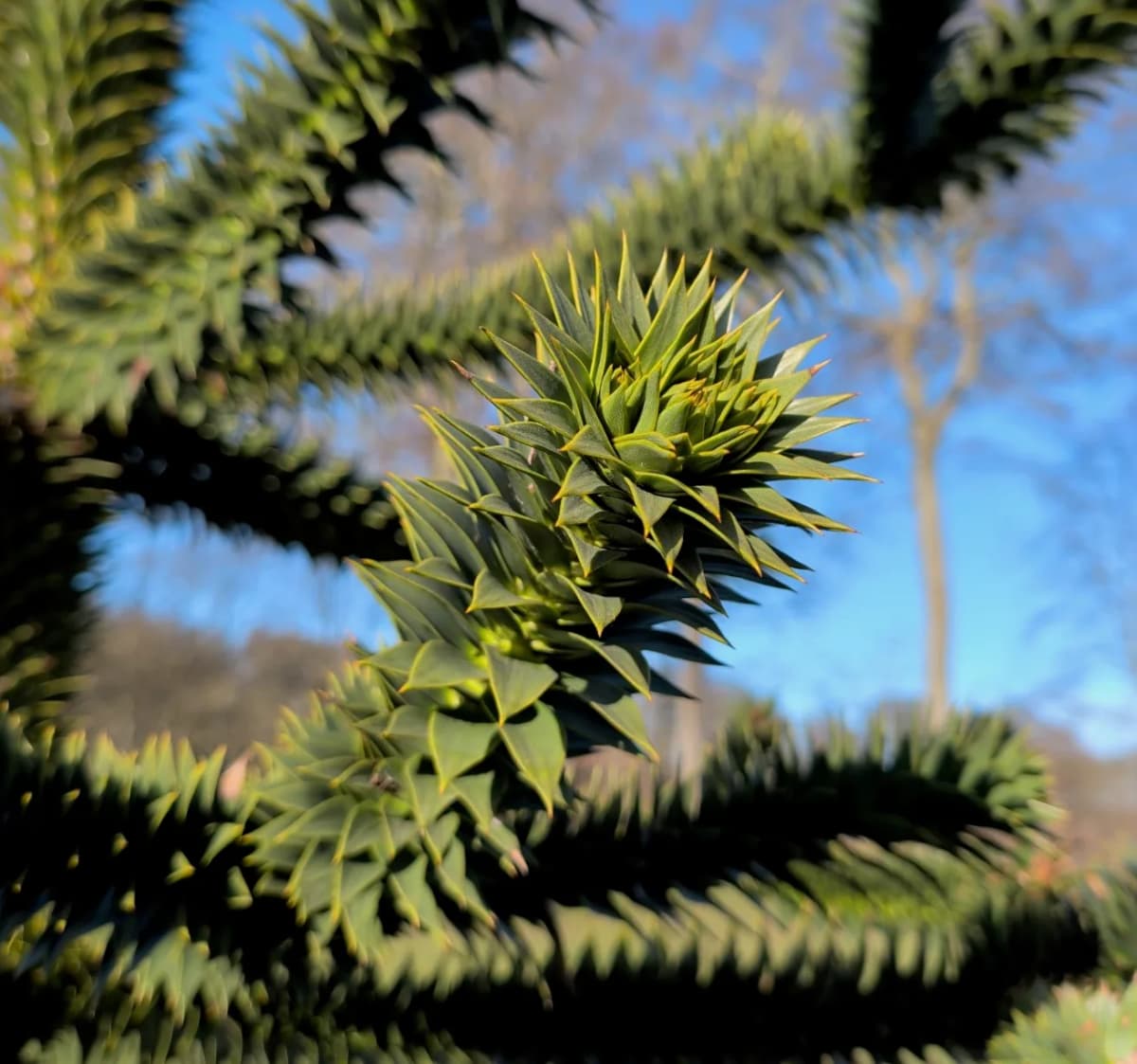
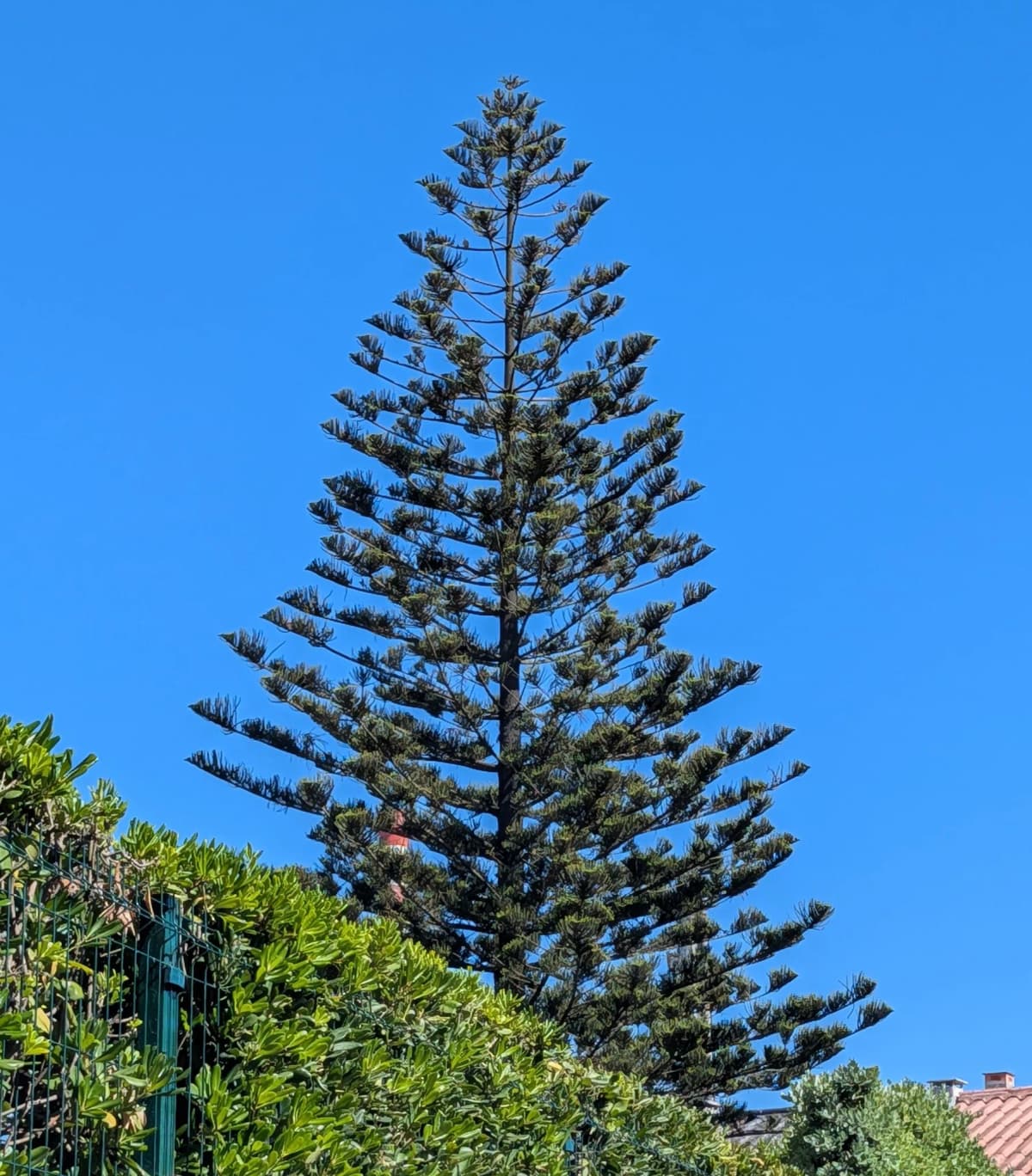
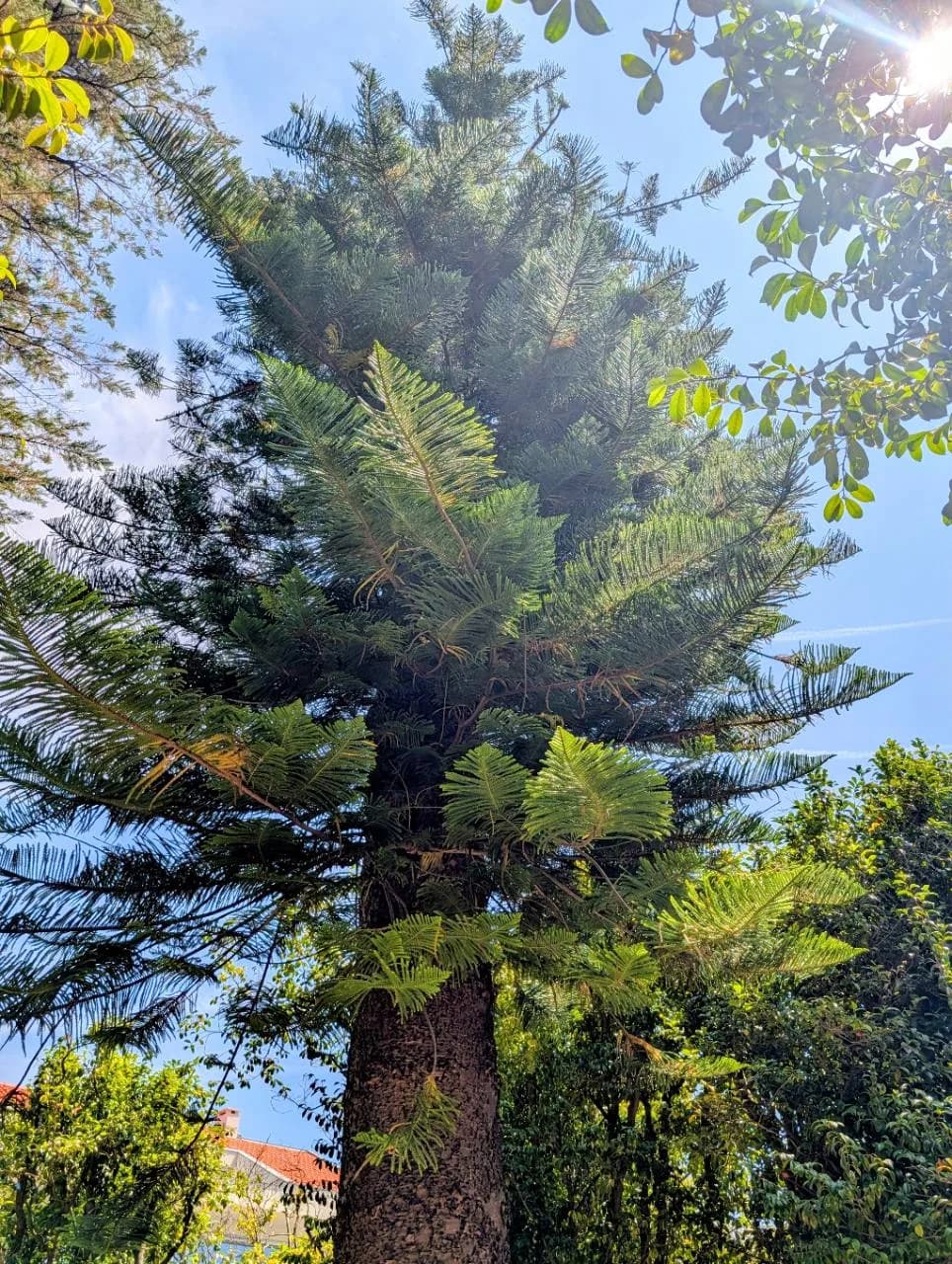
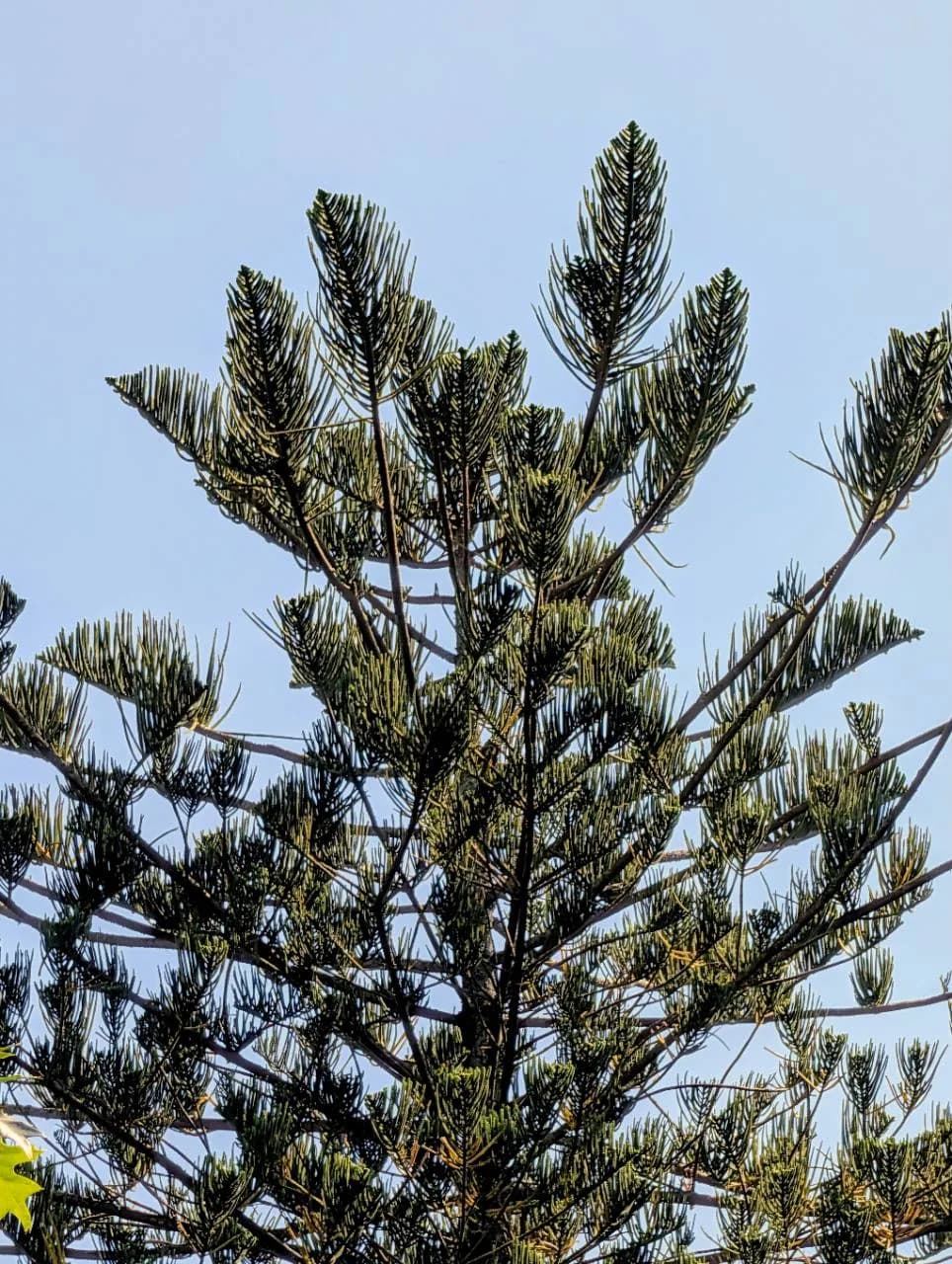
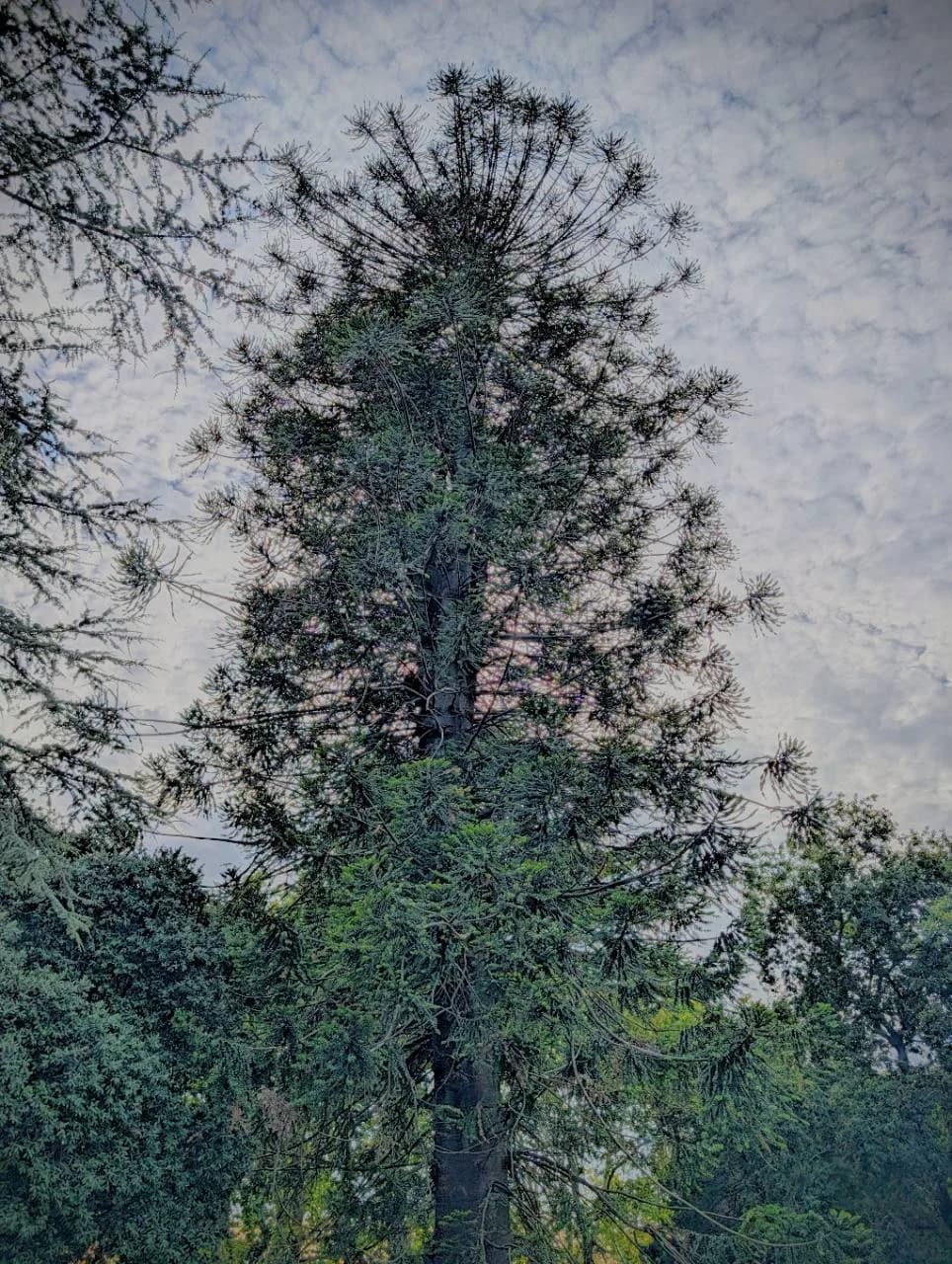
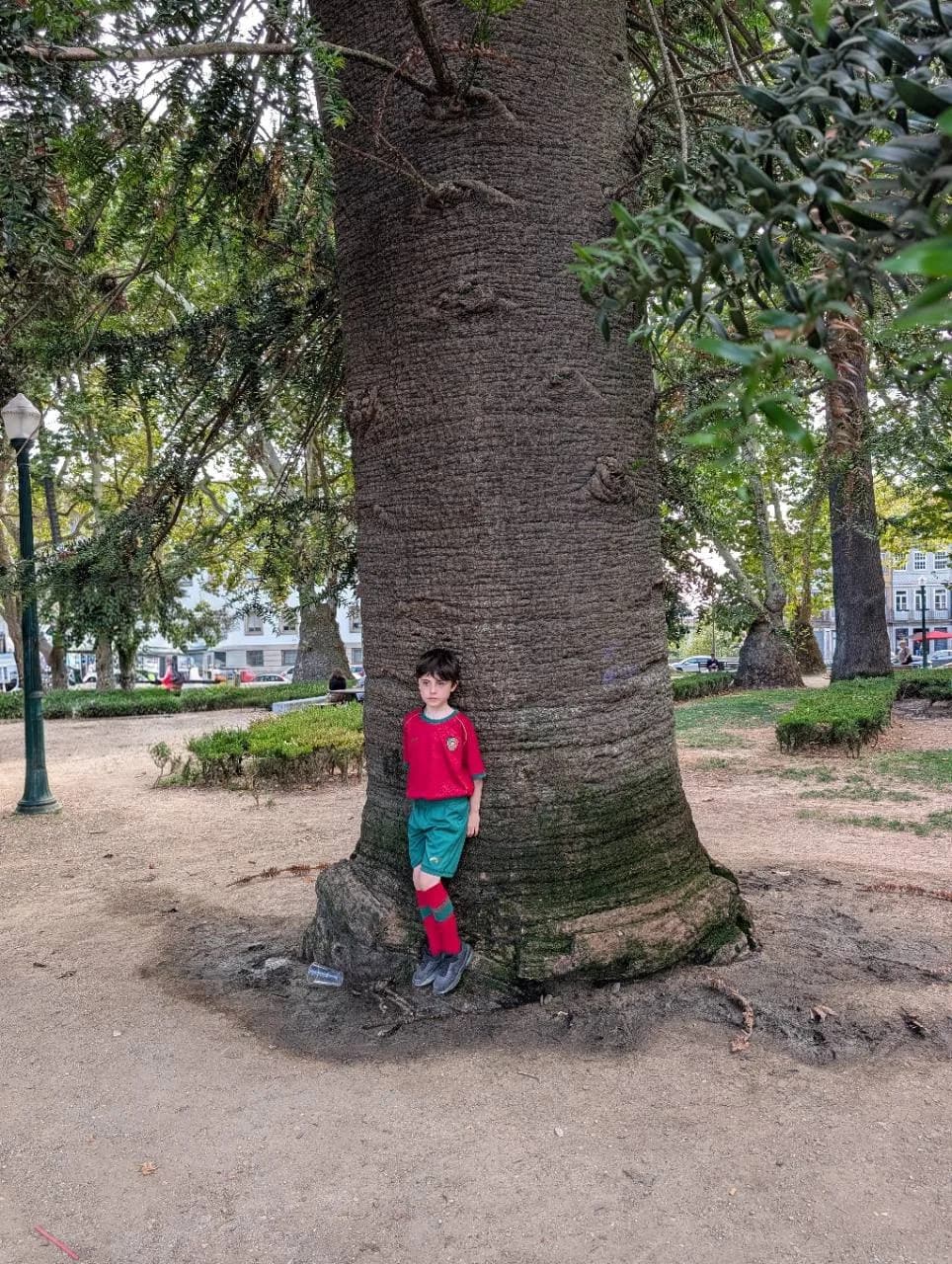
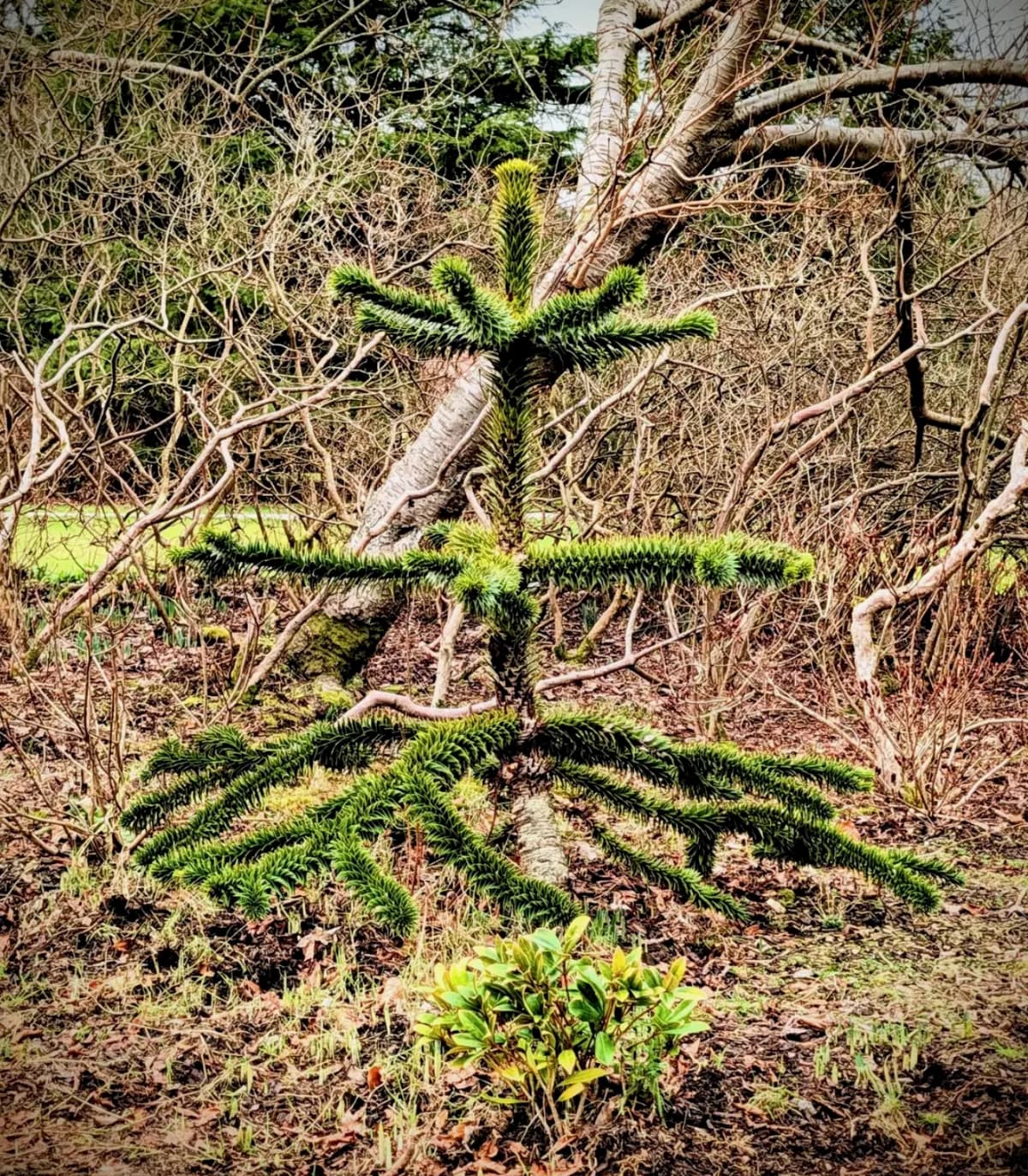
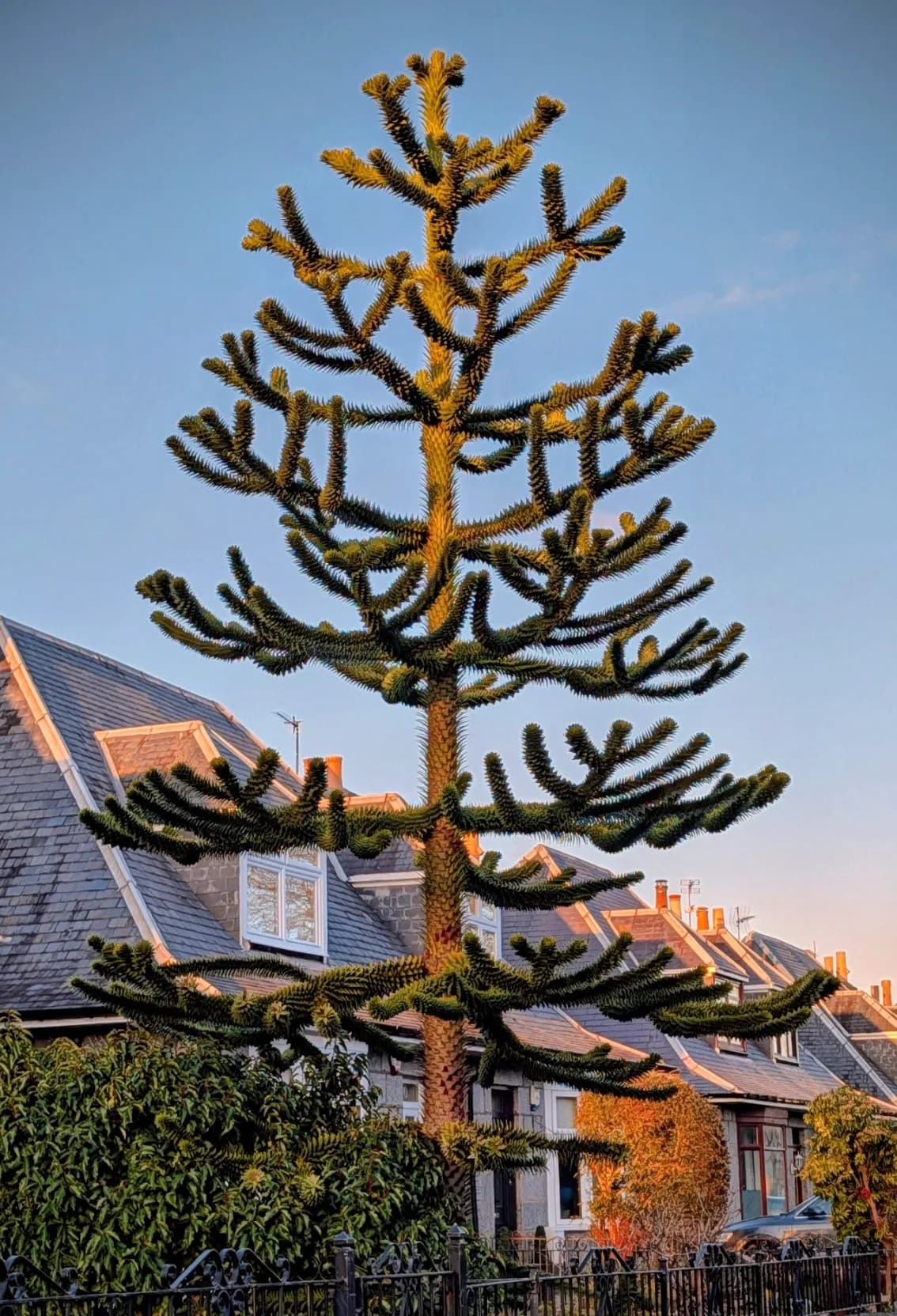
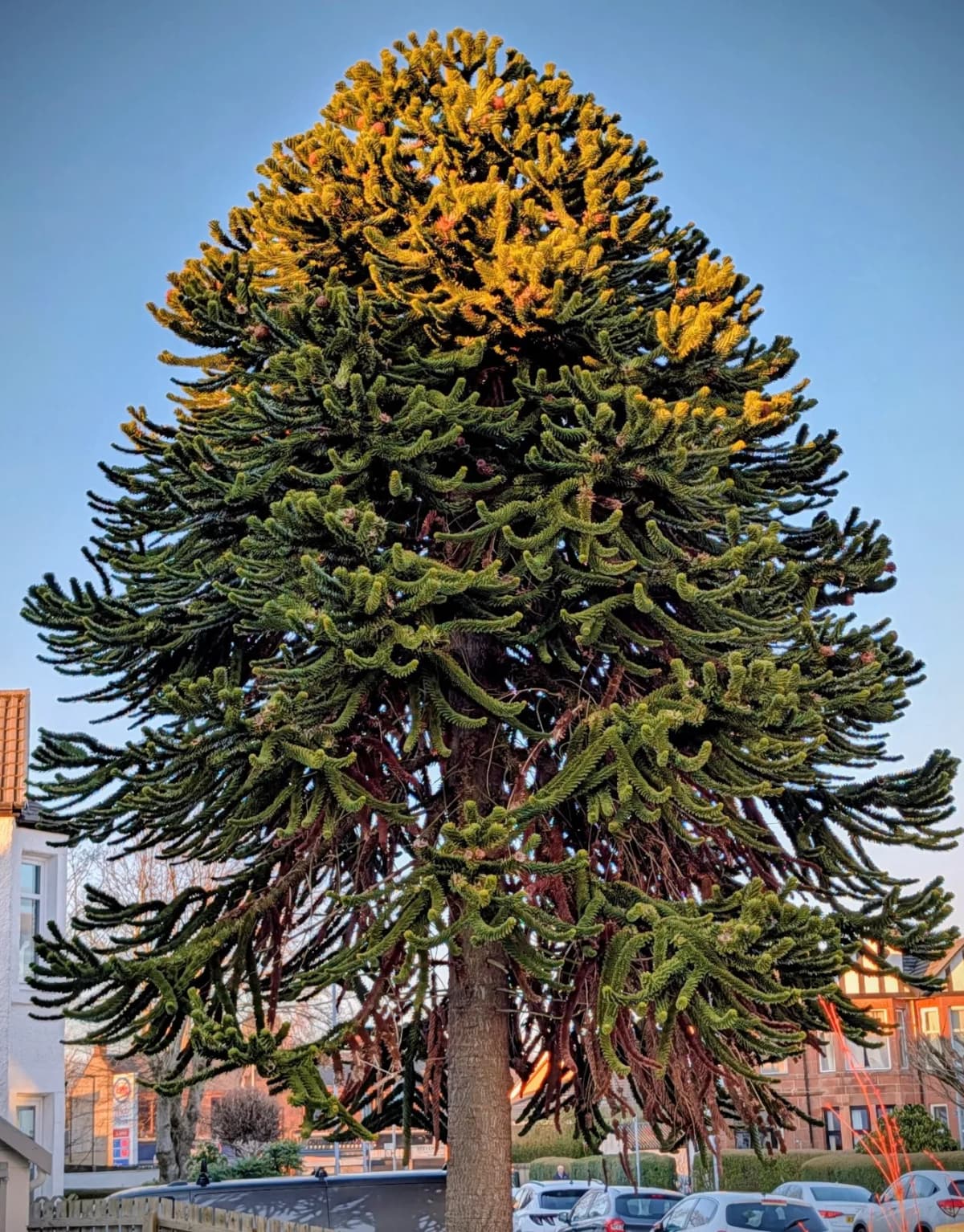
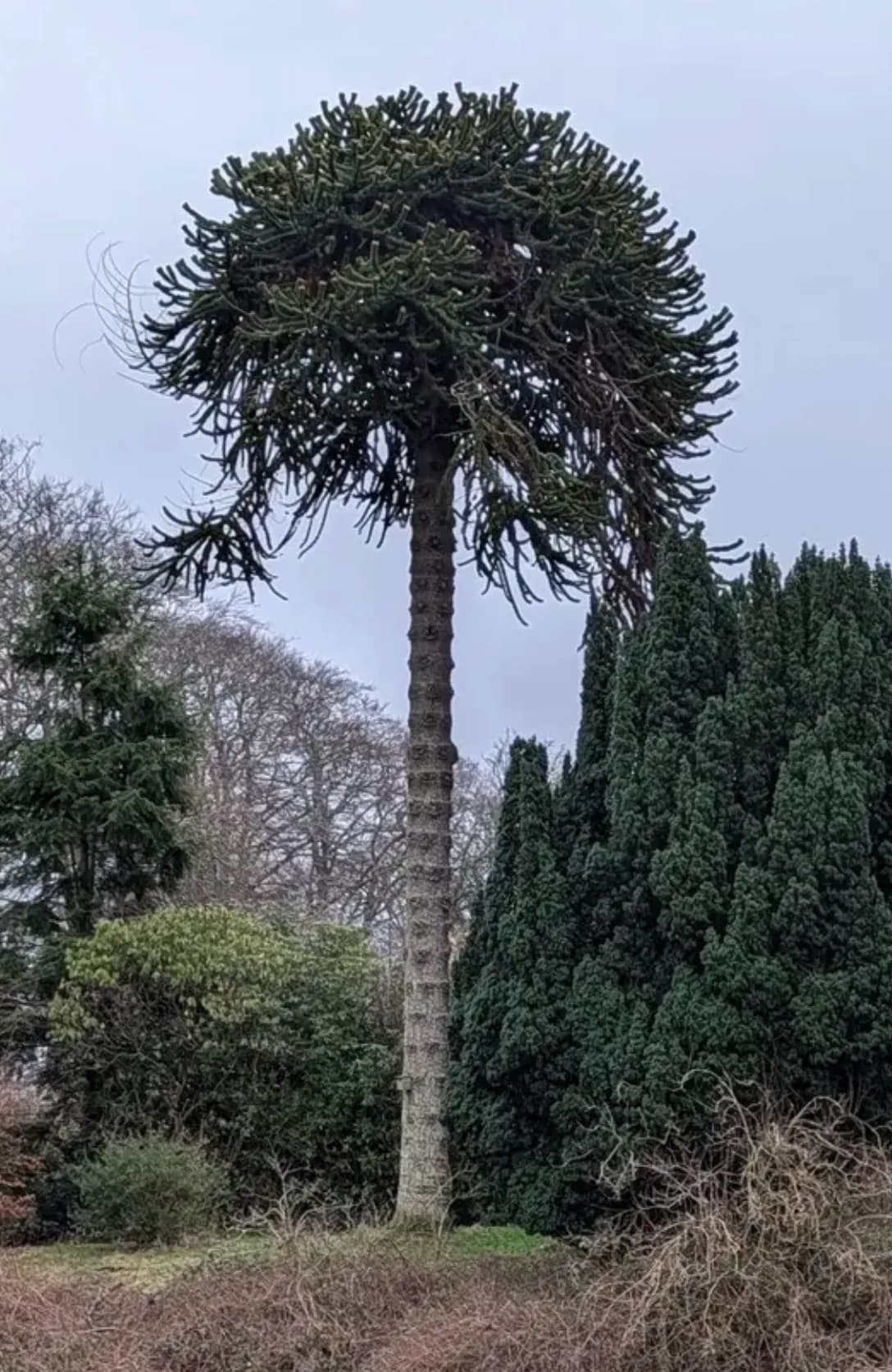
Young trees are densely pyramidal, with branches from near ground level. Older trees often shed their lower branches and develop a tall, straight trunk beneath a flatter, umbrella-like crown. The horizontal branches appear in regular whorls and have a distinctly reptilian texture.
Quick identification checklist
- • Stiff, overlapping triangular leaves
- • Branches arranged in clear tiers
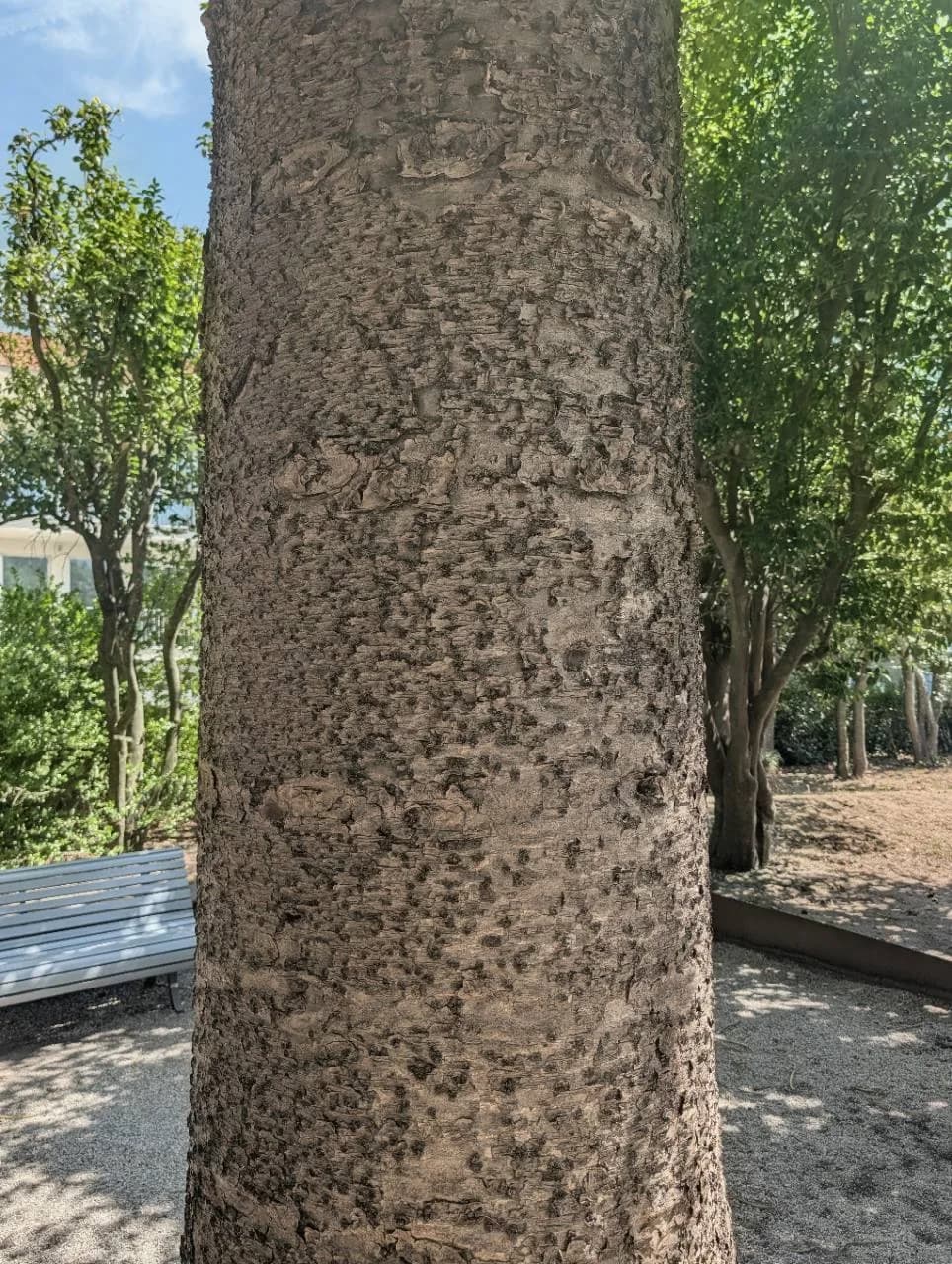
- • Straight trunk with grey-brown bark
- • Rounded female or cylindrical male cones
Still unsure? Compare your tree with real examples in the Monkey Puzzle Watch gallery.
Several members of the same ancient plant family share its orderly branch structure, although they are readily distinct at close range. You can compare them in the related Araucariaceae section.
Where monkey puzzle trees come from
Wild monkey puzzle forests occur in central and southern Chile and southwest Argentina, mainly in the Andes and Chile's coastal mountains. Kew records the natural habitat at roughly 600 to 1,800 metres above sea level, in a cool temperate climate with abundant rainfall.
The tree is also called pehuén or pewen in Mapudungun. Its large seeds, piñones, have long been an important food for Pehuenche communities. The species later travelled widely as an ornamental, becoming especially familiar in Britain, Ireland, western Europe, the Pacific Northwest and other cool, moist regions.
For the story of Archibald Menzies, Victorian planting fashions and a name coined for a monkey that never met the tree, visit our history of the monkey puzzle tree.
Size, shape and lifespan
This is not a patio conifer with modest ambitions. Kew reports that wild trees can reach about 50 metres, while the RHS classifies garden specimens as taller than 12 metres with a spread beyond 8 metres. Individual trees can live for more than 1,000 years.
Growth depends on climate, soil, exposure and age. The RHS gives 20 to 50 years as the time to reach its broad “ultimate height” category, but the tree continues maturing for far longer. Before planting, allow for the adult crown, falling cones and professional access. A tiny architectural sapling is making a very long-term proposal.
How the silhouette changes with age
These four different trees show the broad progression from low, symmetrical tiers to the long bare trunk and compact crown of an old specimen. Individual trees vary, so think of this as a visual sequence, not a precise ageing chart.
Male and female trees, cones and seeds
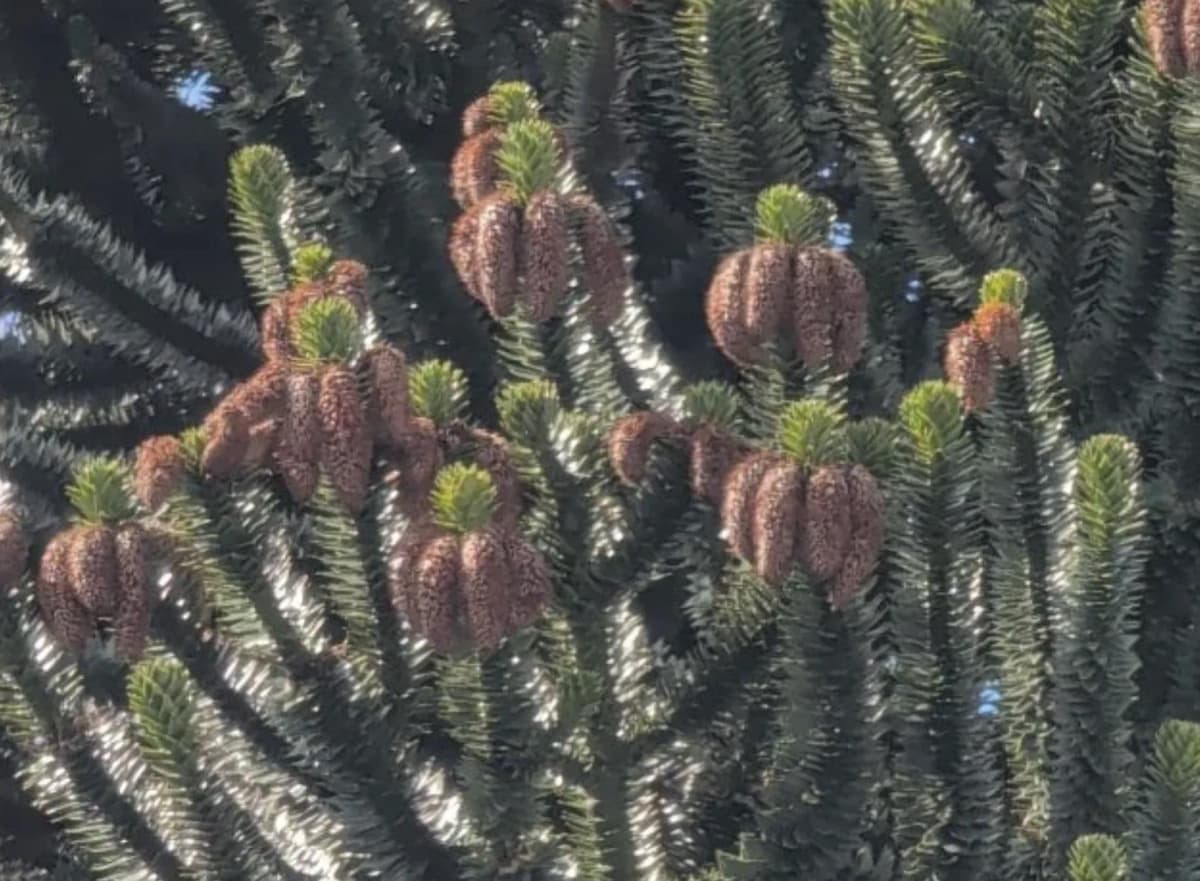
Monkey puzzles are usually dioecious: male and female cones grow on separate trees. Male cones are cylindrical and release pollen. Female cones are round, can approach 20 cm across and may contain around 200 seeds. A tree's sex usually becomes clear only when it is mature enough to produce cones.
Female trees need pollen from a male tree for fertile seed. The seeds are edible and culturally important in the species' native range, but do not eat anything unless it has been identified confidently. Respect local rules and never collect from protected wild populations.
Male and female cones compared
How to plant and care for a monkey puzzle tree
Choose the final position carefully. Monkey puzzles dislike being moved once established and need room above and around them. In temperate regions, plant in an open position with full sun or partial shade, moderately fertile soil and reliable drainage. Shelter young trees from cold, drying winds.
- Dig a hole no deeper than the root ball and substantially wider.
- Plant at the same level it grew in its container, then firm gently.
- Water thoroughly and keep the root zone evenly moist while it establishes.
- Mulch the surface without piling mulch against the trunk.
- Keep a generous clear radius so the mature tree is not boxed in by buildings.
Climate note
Care advice is regional. Established trees tolerate severe cold, but prolonged heat, drought, waterlogged soil and salt-laden exposure can all change what a tree needs. Use this as a species overview, then check advice from a botanic garden or qualified horticulturist in your climate.
Pruning, browning and common problems
Monkey puzzles naturally form their distinctive shape and usually need little pruning. Remove only dead, damaged or unsafe growth. The RHS warns that only young specimens respond well when cut back into old wood, so major work on a mature tree belongs with a qualified arborist.
The species is generally pest-free. The RHS notes possible susceptibility to honey fungus. Browning can also follow drought, waterlogging, root disturbance or harsh exposure, so the visible symptom is not a diagnosis by itself. Check the whole site and seek local professional advice if decline is spreading.
Before pruning or removing a large tree, check local planning, conservation and protected-tree rules. These vary by country and municipality.
Why monkey puzzle trees are endangered
Araucaria araucana is classified as Endangered on the IUCN Red List. Wild populations have been damaged by human-caused fires, historic logging, grazing and conversion of native habitat. The species is also listed in CITES Appendix I, which tightly restricts international commercial trade in wild-sourced material.
Garden trees are not a substitute for functioning wild forests, but documenting cultivated trees can preserve histories, support public interest and help people notice changes over time. That is where Monkey Puzzle Watch comes in, clipboard optional.
What the Monkey Puzzle Watch record shows
Monkey Puzzle Watch is building a living, community-made record of cultivated monkey puzzle trees around the world. Each verified sighting adds a place, photograph and point in time to a dataset that can help people recognise the species and preserve the story of individual trees.
- 563
- verified sightings
- 9
- countries represented
- 858
- community photographs
The map is an observational record, not a complete census or a map of the species' wild distribution. Its gaps reflect where contributors have looked so far. Explore the worldwide sightings map or help the record grow by adding a tree you know.
Meet the monkey puzzle tree's relatives
Monkey puzzle, Norfolk Island pine, bunya pine and Wollemi pine all belong to the ancient conifer family Araucariaceae. Despite their common names, none is a true pine in the genus Pinus. The first three are especially close relatives in the genus Araucaria; Wollemi pine belongs to a separate genus in the same family.
They are relatives rather than true lookalikes. Once you know their foliage and mature forms, none is likely to pass for a monkey puzzle at close range. The similarities are family resemblances: straight trunks, orderly tiers of branches and an architectural silhouette.
Kew's current taxonomy accepts 20 species in the genus Araucaria, so this is a selective introduction rather than a complete family roll call. Kew specifically notes monkey puzzle and Norfolk Island pine as widely planted species. We have also included the conspicuous bunya, plus the celebrated Wollemi pine from a different genus in the same family. The selection leans towards trees readers are likely to encounter in cultivation or know by reputation. It is not a list of every close relative.
The bunya is sometimes called the “false monkey puzzle tree”, but “false” does not mean unrelated. It is more like a formidable Australian cousin, complete with cones heavy enough to make standing underneath one a poor lifestyle choice.
A Norfolk Island pine can recall a young monkey puzzle from a distance. It becomes an exceptionally tall, narrow tree, with branches arranged in disciplined horizontal tiers and dense branchlets sweeping upwards. Close up, however, its softer, finer foliage is quite different. A monkey puzzle's stiff triangular leaves wrap the branches in spiky armour instead.
| Tree | Relationship | Native home and climate | How to tell it apart |
|---|---|---|---|
| Monkey puzzle treeAraucaria araucana |
Common monkey puzzle tree questions
How quickly does a monkey puzzle tree grow?
Growth varies with climate and conditions. The RHS places the time to its ultimate height category at 20 to 50 years, but a monkey puzzle can keep developing for centuries.
Can monkey puzzle trees grow in pots?
A young plant can live in a large container temporarily, but this is ultimately a very large tree. It needs a suitable permanent site before it becomes difficult to move.
How can you tell if a tree is male or female?
Look at mature cones. Male cones are long and cylindrical; female cones are large and rounded. A young tree without cones cannot usually be sexed by appearance alone.
Are monkey puzzle trees dangerous?
Their rigid leaf tips are sharp and mature female cones are heavy. Give paths, play areas and buildings sensible clearance, and do not attempt to climb one. The tree has made its position on climbing quite plain.
Are the roots invasive?
The more useful question is whether the site has enough room for a very large, long-lived tree. Keep it well away from buildings and services, and ask a local arborist to assess an established tree where structures are already close.
Sources and further reading
Botanical facts and care recommendations were checked against the following institutions. Local conditions still deserve local advice.
- Royal Botanic Gardens, Kew
Species description, distribution, uses and conservation.
- Kew Science, Plants of the World Online
Accepted taxonomy and native range for Araucaria araucana.
- Royal Horticultural Society
Cultivation, hardiness, pruning, pest and disease guidance.
- IUCN Red List